The Effects of Perimenopause and Menopause on the Hair
Perimenopause and Menopause's Impact on Hair Health.
As women enter perimenopause and menopause, many begin to notice subtle – or sometimes quite noticeable – changes in their hair. It might feel finer, drier, or less full than it once did. For many, these changes can be as emotional as they are physical, especially when hair has long been a source of confidence and self-expression.
Understanding what’s happening within the body can help make sense of these changes — and with the right care, it’s entirely possible to restore strength, shine, and vitality.
Why Menopause Affects the Hair
Perimenopause (the transitional years leading up to menopause) and menopause bring significant hormonal changes. As oestrogen and progesterone levels begin to fall, the balance shifts, and androgens (male hormones such as testosterone) can become more dominant.
This hormonal shift can affect the hair’s natural growth cycle:
- Thinning and reduced density: Fewer hairs may be growing at once, creating a finer overall texture.
- Increased shedding: The hair’s growth phase shortens, leading to more frequent shedding.
- Texture changes: Hair can become drier, coarser, or more prone to frizz.
- Slower regrowth: New hairs may grow back finer or take longer to appear.
These changes are entirely natural — but that doesn’t mean they should be ignored.
The Emotional Connection
Hair isn’t just about appearance; it’s deeply personal. Many women tell me that changes to their hair during menopause make them feel less like themselves. As a hairdresser, I believe one of the most powerful things we can offer during this stage is reassurance — along with the expertise to help your hair thrive again.
Caring for Hair During Perimenopause & Menopause
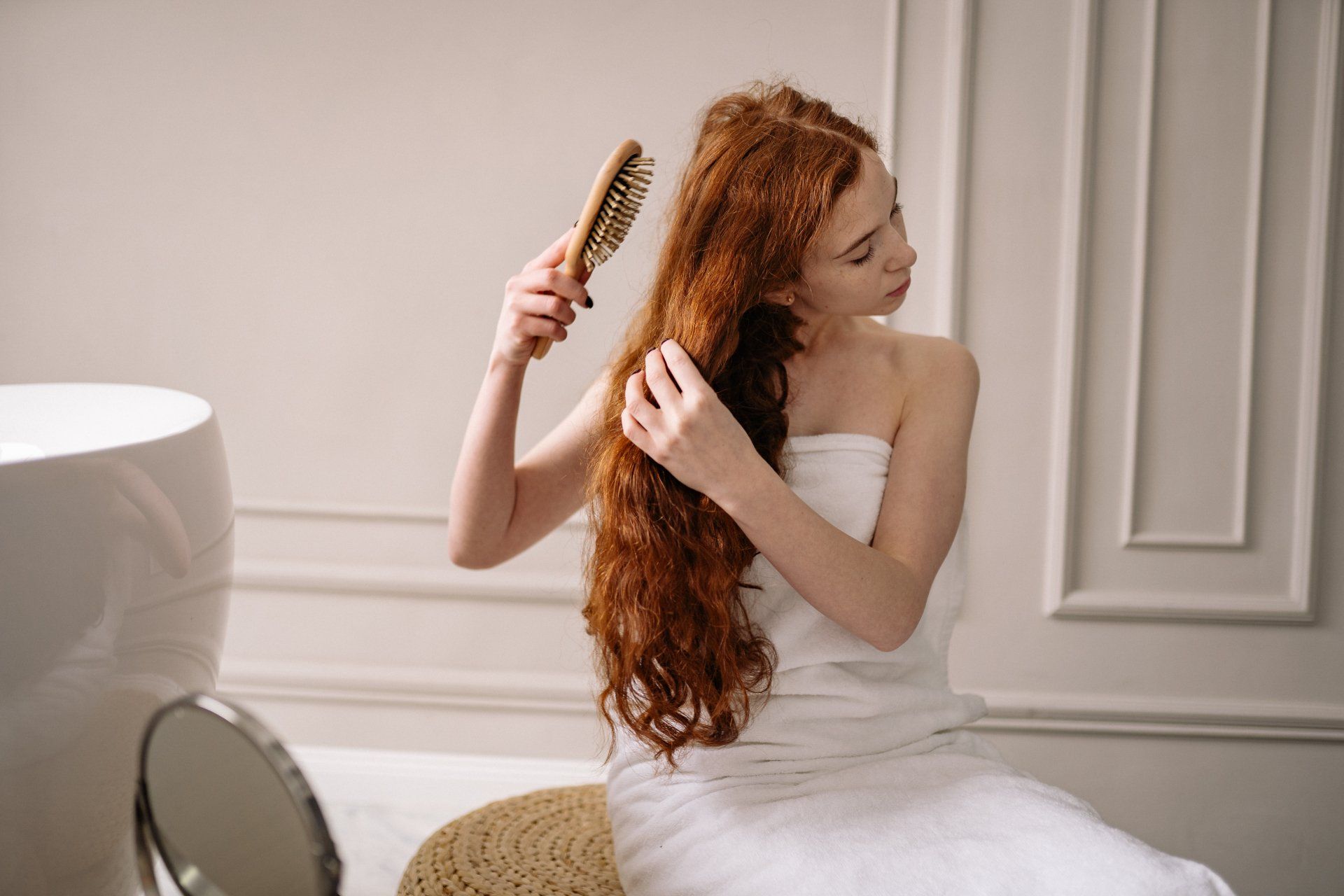
With a few mindful adjustments to your routine, your hair can continue to look and feel beautiful.
1. Focus on scalp health
Healthy hair begins with a healthy scalp. Regular exfoliation and gentle massage can stimulate circulation, helping to support stronger growth.
Recommended / AROMATICA Rosemary Scalp Scrub / INKEY List Salicylic Acid Exfoliating Scalp Treatment
2. Strengthen and nourish
Choose shampoos and conditioners enriched with proteins, natural oils, and moisture-binding ingredients. Treatments with keratin, biotin, or argan oil can help smooth and strengthen each strand.
3. Professional treatments
In-salon treatments tailored to your hair’s changing needs can deeply restore condition, shine, and manageability. Over the coming weeks I will be launching a in-salon treatment menu.
4. Support from within
Nutrition plays a huge role. A diet rich in iron, zinc, vitamin D, and omega-3s supports healthy hair growth from the inside out.
5. A new approach to styling
Sometimes, hair during menopause simply needs a fresh approach — a softer shape, lighter layering, or more movement to bring back that feeling of fullness and vitality.
You’re Not Alone
Perimenopause and menopause can be a time of transformation, both physically and emotionally. The changes you see in your hair are simply part of your body’s natural evolution — and with the right care, it’s entirely possible to love your hair again.